
The Bunion Myth: Why Your Big Toe is Shifting (And Why New Shoes Won't Fix It)
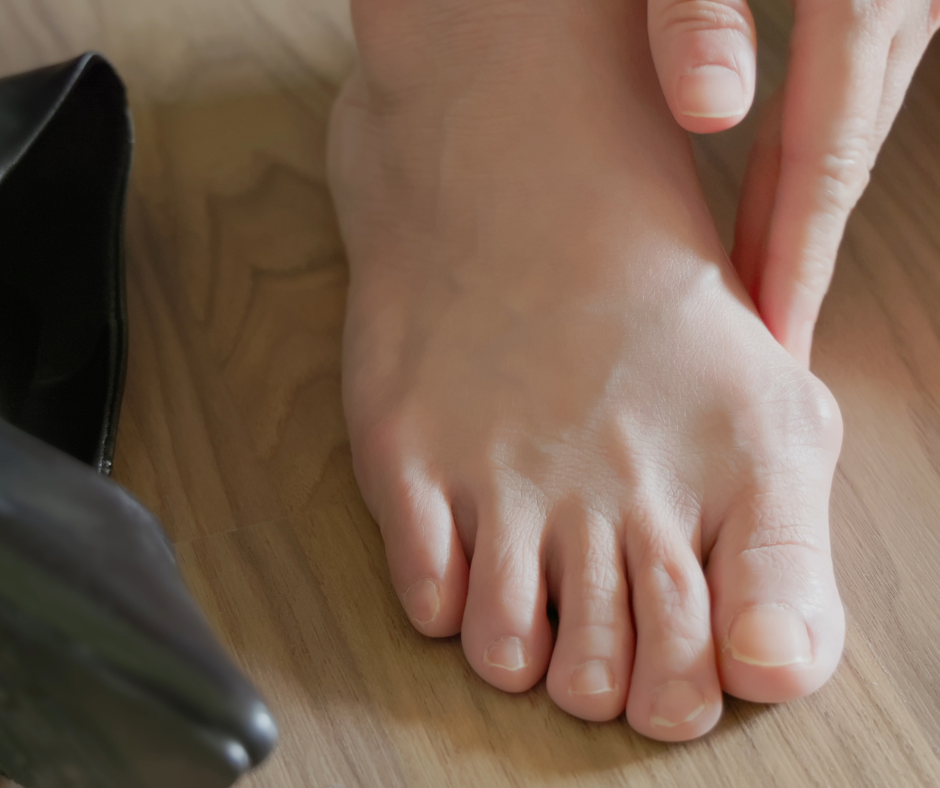
You look down at your feet and notice a hard, bony bump forming at the base of your big toe. Your favorite shoes are suddenly painfully tight, and walking long distances leaves your feet throbbing. Most people assume this painful bump is simply a thick callus or a random growth of extra bone caused by squeezing their feet into narrow shoes.
But if you are constantly buying wider shoes hoping the bump will "go away," you are fighting a losing battle. A Bunion is not a bone growth; it is a progressive structural deformity.
At Amarillo Foot Specialists, we help patients decode the true cause of their foot pain every day. If you are tired of living with a painful bunion, here is the medical reality of what is happening under your skin, and how our podiatrists can finally fix it.
The Knowledge Gap: What is a Bunion, really?
A bunion forms when the biomechanical foundation of your foot fails.
When the weight of your body falls unevenly on your joints, the bone connected to your big toe starts to drift outward, while your big toe is pushed sideways into your other toes.
The "Bump"
· That hard lump you see on the side of your foot is the head of your own bone protruding out of alignment.
The Domino Effect
· Because your toes are being crushed together, an untreated bunion frequently leads to a chain reaction of other painful foot problems, including hammertoes, severe corns, and deep calluses.
“Did My Shoes Cause This?”
Patients often blame themselves, thinking their high heels or tight work boots caused the deformity. Bunions are primarily the result of genetic factors.
· You inherit a poor foot structure (like flat feet or unstable arches) that makes your joints prone to drifting.
· However, your footwear pulls the trigger. Trauma and ill-fitting, narrow shoes squeeze that unstable joint into a painful angle, rapidly accelerating the deformity.
The Danger of "Waiting It Out"
The most important thing you need to know about a bunion is that it is progressive.
It will never heal or reverse itself on its own. If left untreated, it will only become more rigid, more pronounced, and more painful. While you cannot "cure" a bunion at home, we can help you manage the pain and slow its progression using conservative treatments:
Footwear Modification: Moving to shoes with a wide, deep toe box.
Padding: Protecting the joint from friction.
Custom Orthotics: Prescription inserts that act as a structural scaffold, correcting the poor foot structure that is causing the bone to drift.
The Ultimate Fix: Outpatient Surgery
While orthotics and padding can slow the progression and relieve daily pain, surgery is the only way to physically correct the bunion deformity and realign the bone.
Many patients avoid the doctor because they fear that bunion surgery means spending months in a heavy cast. Today, that is rarely the case.
Outpatient Convenience: Bunion surgery is usually performed on an outpatient basis, meaning you get to go home to your own bed on the same day as the surgery.
Rapid Recovery: Our objective is to get you back on your feet as soon as possible. Many of our patients start walking on the operative foot within just a few days and can return to work within a short period of time!
Stop Letting Your Shoes Dictate Your Life
You do not have to live with the daily pain of a misaligned joint. We can provide a definitive diagnosis and lay out your treatment options, from custom orthotics to surgical correction!
Questions? Concerns? Contact Dr. Brandon Holloway and Dr. Archana Krishnan of Amarillo Foot Specialists, located in Amarillo, TX, at (806) 322-3338 today to schedule a consultation! We look forward to seeing you.