
Can You Pass the 10-Second Balance Test?
What Your Feet Reveal About Your Fall Risk
September is National Falls Prevention Awareness Month. While most fall-prevention advice focuses on removing trip hazards like loose rugs or installing grab bars in the shower, the most critical piece of safety equipment you own is literally touching the floor right now: your feet.
Your feet are your body’s primary sensory connection to the ground. When your foot health deteriorates, your brain loses the vital proprioceptive data it needs to keep you upright.
Before you assume your balance is perfectly fine, we challenge you to try a simple, at-home assessment. If you struggle, the team at Amarillo Foot Specialists can help you uncover the hidden mechanical deficits sabotaging your stability.
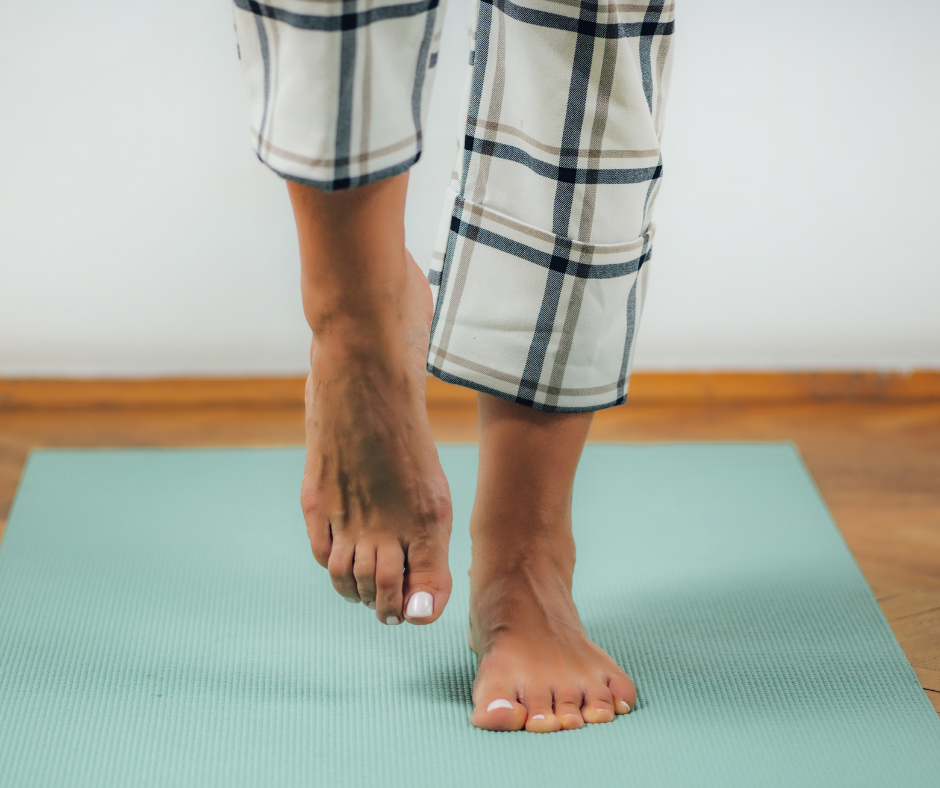
The 10-Second One-Leg Test (Try This Right Now)
Stand next to a sturdy chair or a kitchen counter so you have something to grab if you wobble.
Lift one foot off the ground.
Do not let your lifted foot touch your standing leg.
Keep your hands on your hips or by your side (no flailing!).
Try to hold this position for exactly 10 seconds.
Switch and test the other leg.
If you had to put your foot down early, wildly wave your arms, or grab the counter, your risk of a serious fall is significantly elevated. This inability to maintain unilateral stability is often a direct result of hidden foot problems.
The Sneaky Foot Issues Ruining Your Balance
Your balance relies on a kinetic chain. If the foundation is unstable, the rest of the tower sways. There are several structural foot issues that can increase the risk of falling.
· For example, severe bunions or hammertoes alter the way your toes grip the floor, robbing you of your forward balance.
· Even worse, if you are actively avoiding a painful spot on your heel, you will unconsciously alter your gait.
· This compensation completely throws off your center of gravity, which is often the exact reason patients find themselves asking, "Is my foot pain causing back pain?"
DIY Balance Boot Camp (Do These at Home)
If you failed the 10-second test, do not panic. Balance is a skill that can be rebuilt. You can prevent falls with these 8 tips, starting with targeted strengthening exercises to wake up the tiny stabilizer muscles in your arches:
Heel-to-Toe Raises: Stand behind a chair. Slowly rise onto your tiptoes, hold for two seconds, and then rock back onto your heels, lifting your toes off the floor. Repeat 15 times. This strengthens the calf and anterior shin muscles responsible for catching you when you trip.
The Towel Scrunch: Sit in a chair barefoot with a hand towel spread out on the floor. Use only your toes to scrunch the towel up and pull it toward you. This rebuilds the intrinsic muscles of the arch.
Progressive Single-Leg Stands: Practice the 10-second test daily. Once you master 10 seconds, try it with your eyes closed (with your hand hovering over a counter!). Removing visual input forces your foot nerves to do 100% of the balancing work.
The "Anti-Fall" Footwear Checklist
You can do all the balance exercises in the world, but if you are walking around the Texas Panhandle in flimsy, worn-out shoes, you are asking for an injury. Finding the perfect fit is critical for foot health and fall prevention.
When evaluating your fall-season footwear, look for these three non-negotiable criteria:
A Wide Base of Support: The sole of the shoe should be wider than the upper material, preventing the shoe from easily tipping over if you step on an uneven surface.
A Firm Heel Counter: Squeeze the back of the heel cup. It should be rigid. If it easily folds inward, the shoe cannot lock your ankle in place.
Low Stack Height: Thick, "marshmallow" midsoles might feel soft, but they disconnect your foot from the ground, muting the sensory feedback your brain needs to balance.
Biomechanical Scaffolding
If your shoes are supportive but you are still struggling with instability, the problem is likely your skeletal alignment. When your arch collapses or your ankle rolls inward (overpronation), your body must work overtime just to stand still.
You can instantly improve fall safety by correcting this alignment from the ground up. This is where clinical orthotics and gait analysis come into play.
By scanning your foot as it strikes the ground, we can design a rigid, prescription insert that perfectly supports your unique foot structure, turning a wobbly, unstable foot into a solid base!
Questions? Concerns? Contact Dr. Brandon Holloway and Dr. Archana Krishnan of Amarillo Foot Specialists, located in Amarillo, TX, at (806) 322-3338 today to schedule a consultation! We look forward to seeing you.